
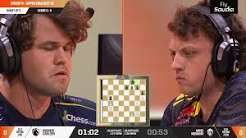
Magnus Carlsen has spent much of his career demonstrating that an equal evaluation does not mean a game is destined to end in a draw. Many of his wins come from positions where the material is balanced, tactical threats are limited, and computer analysis may show little or no advantage. Yet after another thirty or forty moves, the position has changed. One opponent is defending weaknesses, the king has become active, a pawn structure has deteriorated, and Carlsen has created winning chances without a single decisive combination.
This ability makes his endgames useful for understanding the difference between theoretical evaluation and practical difficulty. An equal position may contain many ways to go wrong, just as someone moving through unrelated digital entertainment such as online coin up lightning encounters a completely different decision structure. In chess, Carlsen’s skill lies in identifying positions where equality exists only while the opponent continues finding accurate moves. He then extends the game until maintaining that accuracy becomes difficult.
Equality Does Not Mean Simplicity
When a position is evaluated as equal, both players may have enough resources to maintain the balance. That says little about how difficult those resources are to find.
One side may have several natural moves while the other has only one precise continuation. The numerical evaluation can remain close to zero, but the practical tasks are not equal.
Carlsen understands this distinction.
He often keeps pieces on the board when simplification would produce an immediate draw. The objective is not to pretend that he has an advantage. It is to preserve enough complexity for future mistakes to matter.
Small Weaknesses Become Long-Term Targets
A weak pawn rarely loses a game by itself.
Its importance comes from the pieces required to defend it. If a rook must remain passive or a king cannot move toward another part of the board, one weakness begins influencing the entire position.
Carlsen repeatedly uses this principle.
He may attack a pawn without expecting to win it immediately. The attack can force the opponent into a defensive setup. He can then improve another piece or create a second target.
The position changes gradually rather than through one tactical event.
King Activity Changes the Endgame
The king has a different role once major attacking forces disappear.
In the opening and middlegame, king safety is often a priority. In many endgames, the king becomes an attacking piece.
Carlsen is effective at recognizing when this transition occurs.
An active king can defend pawns, attack weaknesses, support passed pawns, and restrict the opposing king. Moving it one square closer to the center may appear minor, but several such improvements can determine which player controls key squares.
This is one reason his endgames can look simple while remaining difficult to defend.
He Improves the Worst-Placed Piece
When no direct tactic exists, the question becomes which piece can be improved.
Carlsen often answers this before attempting anything forcing.
A rook may move behind a pawn. A knight may search for a better square. The king may advance. A pawn may move only when doing so creates a lasting structural benefit.
This method prevents unnecessary commitments.
Pawn moves cannot be reversed, while pieces can often be repositioned. By improving piece placement first, Carlsen preserves options and forces the opponent to decide how long to maintain a defensive formation.
Pawn Structures Provide a Map
Endgames are frequently decided by details in the pawn structure.
An isolated pawn, a backward pawn, a majority on one wing, or the possibility of creating a passed pawn can determine the plan.
Carlsen reads these structures as long-term information.
He does not always need to attack the most obvious weakness. Sometimes its purpose is to restrict the opponent while play develops elsewhere.
A kingside majority, for example, may force defensive attention even before a passed pawn exists.
The structure tells him where future pressure can be created.
Exchanges Are Evaluated by Function
Many players assume that exchanging pieces makes an equal position easier to draw.
That can be true, but not every exchange helps the defender.
Carlsen evaluates what disappears from the position after an exchange.
If trading rooks allows his king to penetrate, the simplified position may become more dangerous. If exchanging a defender leaves a weak pawn exposed, fewer pieces can actually make the advantage easier to exploit.
The important question is therefore not how much material remains.
It is which pieces remain and what tasks they can perform.
Time Becomes a Strategic Resource
Long endgames test more than calculation.
A player may have already spent hours at the board before reaching the phase where Carlsen begins applying sustained pressure. At that point, concentration can decline while the clock continues running.
Carlsen has extensive experience playing such positions.
He can make moves that preserve tension without taking excessive risk, leaving the opponent to solve another defensive problem.
No individual decision needs to be impossible.
The cumulative effect matters. Twenty manageable decisions can become harder than one difficult calculation because each creates another opportunity for an error.
He Rarely Needs the Opponent to Blunder
A common misunderstanding is that these victories depend on opponents eventually making obvious mistakes.
Often the errors are much smaller.
A rook becomes slightly passive. A king moves toward the wrong wing. A pawn advances too early. A favorable exchange is missed.
None of these decisions may lose immediately.
Carlsen’s strength is connecting them. One small concession changes the next decision, and the next concession creates a position where the evaluation finally begins to move.
The winning advantage is often accumulated rather than discovered.
Patience Is an Active Skill
Waiting in chess does not mean doing nothing.
Carlsen’s patience is based on continuing to improve the position without creating unnecessary weaknesses.
If the opponent has no active plan, there may be no reason to force events.
This places a psychological burden on the defender.
The defender knows that the game could remain equal with accurate play but cannot predict how long that accuracy will be required.
Carlsen can repeat maneuvers, change the location of pressure, and test different setups while keeping the underlying position under control.
Why Equal Endgames Become Winning Chances
Magnus Carlsen’s endgame strength is not based on turning every equal position into a forced win. Many equal positions remain draws against accurate defense.
His advantage is practical.
He recognizes which positions allow play to continue, improves pieces before committing pawns, activates the king, identifies structural targets, and evaluates exchanges according to their consequences rather than their appearance.
Most importantly, he keeps asking the opponent to make decisions.
An equal evaluation describes the position at one moment. Carlsen focuses on what happens after ten, twenty, or forty more moves. If equality requires repeated precision, he is willing to keep playing until maintaining that balance becomes the hardest task on the board.
